n any industrial, manufacturing, or maintenance setting, heavy machinery and electrical systems are essential to daily operations. However, these powerful systems also present severe hidden dangers. When equipment unexpectedly starts up, releases stored energy, or discharges hazardous electricity, the consequences can be catastrophic—resulting in severe injuries, permanent disabilities, or fatalities.
This is where Lockout/Tagout (LOTO) procedures come in. LOTO is not just a regulatory box to check; it is a critical safety protocol designed to protect workers from the sudden release of hazardous energy.
Here is why LOTO procedures are vital for your facility and how implementing them effectively creates a culture of safety.
What is Lockout/Tagout?
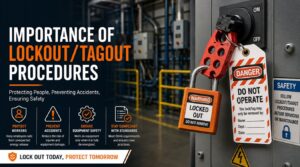
Lockout/Tagout (LOTO) refers to specific safety practices and procedures used to safeguard employees from the unexpected energization or startup of machinery and equipment, or the release of hazardous energy during service or maintenance activities.
- Lockout: The placement of a lockout device on an energy-isolating mechanism in accordance with an established procedure, ensuring the equipment cannot be operated until the lockout device is removed.
- Tagout: The placement of a prominent warning tag on an energy-isolating device to indicate that the equipment must not be operated until the tag is removed according to procedure.
Why LOTO Procedures Are Non-Negotiable
1. Saving Lives and Preventing Severe Injuries
According to safety statistics, thousands of workplace injuries and dozens of fatalities occur each year due to the failure to properly control hazardous energy. Injuries related to machinery maintenance often involve amputations, crushed limbs, severe electrical shocks, and burns. A robust LOTO program ensures that equipment is completely de-energized and zero energy state is verified before any hands touch internal components.
2. Ensuring Regulatory Compliance
Regulatory bodies like OSHA (Occupational Safety and Health Administration) strictly enforce control of hazardous energy standards. Failing to implement proper LOTO procedures, maintain written programs, or provide employee training can result in severe, costly citations, heavy fines, and even mandatory facility shutdowns.
3. Mitigating Financial and Operational Costs
Beyond the human cost, workplace accidents create a massive financial burden on organizations. Expenses include:
Workers’ compensation claims and rising insurance premiums.
Legal fees and regulatory fines.
Costly equipment damage during unexpected accidents.
Operational downtime and lost productivity while investigations take place.
Investing time in a proper LOTO program is far more cost-effective than dealing with the aftermath of a preventable tragedy.
Key Steps to an Effective LOTO Program
Implementing LOTO requires more than just buying a few padlocks. A comprehensive program involves clear, standardized steps:
Develop Machine-Specific Procedures: Every piece of equipment has unique energy sources (electrical, pneumatic, hydraulic, thermal, or mechanical). Clear, step-by-step documentation must be posted or readily available for each machine.
Notify Affected Employees: Before machinery is shut down, all operators and workers in the area must be informed that maintenance is taking place.
Shut Down and Isolate: Safely turn off the equipment using standard operating controls, then disconnect it from all primary and secondary energy sources.
Apply Locks and Tags: Secure energy-isolating devices (such as circuit breakers, valves, and switches) with individual locks and danger tags assigned to authorized personnel.
Release Stored Energy: Bleed pneumatic lines, discharge capacitors, block raised mechanical parts, and relieve pressure to ensure a true zero-energy state.
Verify Isolation: Test the equipment controls (e.g., trying to hit the “Start” button) and use testing tools (like multimeters) to confirm that the system is completely dead before work begins.
Fostering a Safety-First Culture
Rules on paper are only as good as the team executing them. To make LOTO truly effective in your facility:
Train Thoroughly: Ensure that both authorized personnel (those performing the maintenance) and affected employees (those operating the machinery) receive regular, comprehensive training.
Provide Proper Tools: Equip your team with high-quality, standardized padlocks, lockout hasps, valve covers, and highly visible warning tags.
Conduct Routine Audits: Regularly review your LOTO procedures and observe workers in the field to ensure compliance and catch bad habits before an accident occurs.
Final Thoughts
Lockout/Tagout procedures demand time, discipline, and attention to detail. However, that small investment of effort pays off in the most important way possible: ensuring every worker goes home safe at the end of every shift.
Looking for a trusted safety partner?
Contact NICO Marine today to discuss your requirements and let our experienced team support your operations with industry leading products, technical expertise, and responsive service.