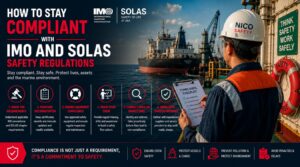
Navigating the complex landscape of international maritime law can feel like sailing through a permanent storm. For shipowners, operators, and masters, keeping vessels compliant with the International Maritime Organization (IMO) and the International Convention for the Safety of Life at Sea (SOLAS) is non-negotiable.
Failing to meet these rigorous standards doesn’t just invite hefty fines or Port State Control (PSC) detentions—it puts lives, cargo, and marine ecosystems at risk. With continuous updates to safety codes, maintaining seamless compliance requires a proactive, structured approach.
Here is a practical guide on how to stay ahead of IMO and SOLAS regulations and keep your operations running smoothly.
1. Master the Core Framework of SOLAS Chapters
SOLAS is structured into distinct chapters, each governing a critical element of vessel design, equipment, and operation. To maintain compliance, your shore-based management and onboard crew must be fluent in the chapters most relevant to your fleet:
Chapter II-1 (Construction & Machinery): Focuses on watertight integrity, structural design, and recent mandates—such as strict safety requirements for anchor handling winches and lifting appliances.
Chapter II-2 (Fire Protection & Extinction): Covers active and passive fire safety, detection systems, and evolving rules regarding low-flashpoint fuels and Ro-Ro vehicle space safety.
Chapter III (Life-Saving Appliances): Regulates lifeboats, rescue boats, and personal life-saving gear under the LSA Code.
Chapter V (Safety of Navigation): Dictates bridge equipment, voyage planning, and pilot transfer arrangements.
2. Track Regulatory Updates and Amendment Cycles
IMO regulations are not static; they evolve constantly to address emerging technological risks, environmental targets, and lessons learned from past incidents.
Stay Informed: Regularly monitor updates directly from the IMO, your flag state administration, and your recognized classification society (e.g., DNV, Lloyd’s Register, ABS).
Anticipate Retroactive Mandates: Pay close attention to phased rollouts. For instance, recent amendments target strict bans on PFOS-based fire-fighting foams and introduce enhanced video monitoring and fire detection requirements for Ro-Ro spaces. Knowing deadlines ahead of time prevents last-minute compliance scrambles during scheduled surveys.
3. Implement a Robust Safety Management System (SMS)
Under SOLAS Chapter IX, the International Safety Management (ISM) Code requires companies to establish a comprehensive SMS. Your SMS should bridge the gap between office management and the crew at sea:
Clear Procedures: Document step-by-step instructions for safety routines, equipment checks, and emergency responses.
Rigorous Record-Keeping: Ensure logs for maintenance, drills, and equipment servicing are meticulously maintained. If it isn’t documented, Port State Control will assume it didn’t happen.
Continuous Feedback: Encourage crews to report near-misses and non-conformities so shore management can address systemic issues before they result in a safety violation.
4. Prioritize Equipment Certification and Servicing
A primary trigger for vessel detentions is out-of-date or uncertified safety equipment.
Approved Service Suppliers: Always use IMO-compliant and class-approved service providers to inspect life-saving appliances, fire suppression systems, and gas detectors.
Flashpoint Verification: Ensure fuel suppliers provide proper documentation verifying that oil fuel meets mandatory flashpoint safety limits (minimum 60°C under SOLAS II-2).
Onboard Spares and Testing: Maintain the required inventory of calibration gases, testing kits, and certified replacement parts on board at all times.
5. Foster a Culture of Continuous Training
The most advanced safety equipment is useless if the crew doesn’t know how to operate it under pressure.
Routine Drills: Go beyond minimum compliance by executing frequent, realistic safety drills—including enclosed space entry, fire-fighting responses, and damage control exercises.
Familiarization: Ensure newly boarded crew members undergo immediate safety familiarization before taking on operational duties, focusing heavily on emergency escape routes, alarm signals, and PPE usage.
Final Thoughts
Staying compliant with IMO and SOLAS regulations is an ongoing commitment rather than a one-off audit preparation. By embedding regulatory awareness into your daily operations, maintaining clear documentation, and empowering your crew through continuous training, you safeguard your ships against detentions and most importantly ensure your crew returns home safely.
Looking for a trusted safety partner?
Contact NICO Marine today to discuss your requirements and let our experienced team support your operations with industry leading products, technical expertise, and responsive service.