When an emergency strikes, a fire extinguisher is often your first line of defense. However, grabbing the wrong extinguisher can be dangerous—or even fatal. With different types of fires requiring specific extinguishing agents, selecting the right device for your home, office, or industrial facility is critical.
This guide walks you through everything you need to know to choose the right fire extinguisher for your space.
1. Identify Your Specific Fire Hazards
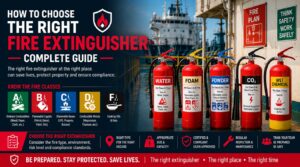
Before shopping for an extinguisher, assess the types of materials and potential fire risks present in your environment. Fires are classified based on their fuel source:
Class A: Ordinary combustibles like wood, paper, cloth, trash, and plastic.
Class B: Flammable liquids and gases such as gasoline, oil, paint, and propane.
Class C: Energized electrical equipment like wiring, fuse boxes, and computers.
Class D: Combustible metals like magnesium, titanium, and lithium (common in labs or heavy manufacturing).
Class K: Cooking oils, animal fats, and grease (found primarily in kitchens).
2. Understand Fire Extinguisher Types and Agents
Different extinguishers use different agents to smother, cool, or chemically interrupt a fire. Matching the agent to the hazard is vital:
Water and Foam: Best for Class A fires. Foam can also handle Class B, but neither should ever be used on electrical or grease fires.
Carbon Dioxide ($\text{CO}_2$): Excellent for Class B and Class C fires. They leave no harmful residue, making them ideal for server rooms and offices with sensitive electronics.
Dry Chemical (ABC or BC): The most common choice. Multi-purpose ABC extinguishers use monoammonium phosphate to tackle paper, liquids, and electrical fires alike.
Wet Chemical: Specifically designed for Class K commercial kitchen fires, reacting with hot oils to form a cooling, airtight foam blanket.
Dry Powder: Specialized agents exclusively built for Class D combustible metal fires.
3. Look for the Ratings and Sizes
Fire extinguishers feature ratings (like 2-A:10-B:C) that indicate their effectiveness and capacity.
The Number: Preceding the letter, the number indicates the relative size of the fire the unit can extinguish (a higher number means greater capacity).
Physical Weight: Consider who will use the extinguisher. A heavy 20-lb unit packs more punch, but a lighter 5-lb or 10-lb unit may be easier for employees to handle quickly and effectively under stress.
4. Placement and Accessibility
Even the best fire extinguisher is useless if it’s locked in a closet or blocked by inventory.
Mount extinguishers in high-traffic areas, along normal paths of travel, and near potential hazard zones (like kitchens or workshops).
Keep them clearly visible and ensure they are hung at the correct height—typically with the top no more than 5 feet off the ground for easier access.
Final Thoughts
Choosing the right fire extinguisher comes down to matching the unit’s capabilities with your specific environment’s risks. For most general spaces, a multi-purpose ABC dry chemical extinguisher is the ideal choice, while specialized zones like server rooms or commercial kitchens require tailored solutions like CO₂ or Class K units.
Looking for a trusted safety partner?
Contact NICO Marine today to discuss your requirements and let our experienced team support your operations with industry leading products, technical expertise, and responsive service.