Operating in the maritime industry comes with unique challenges. Whether you manage a bulk carrier, an oil tanker, a container ship, or an offshore rig, safety is always the highest priority. One of the most critical safety considerations on any vessel is gas detection.
From confined space entry in ballast and fuel tanks to monitoring cargo spaces, choosing the right gas detector can mean the difference between seamless operations and a fatal maritime accident.
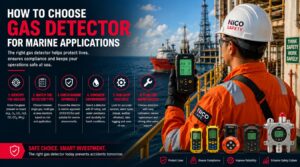
1. Identify the Specific Hazards on Board
Different vessels handle different cargoes and operate under distinct conditions, meaning your gas detection strategy must be tailored to your specific fleet.
The Core Four: Most general cargo ships require baseline monitoring for the “core four” hazards: Oxygen, Flammable Gases, Carbon Monoxide, and Hydrogen Sulphide.
Tankers and Specialized Vessels: If you operate chemical or oil tankers, you must account for specific toxic vapors, volatile organic compounds (VOCs), or higher concentrations of hydrocarbons. Specialized sensors like Photoionization Detectors (PIDs) may be necessary.
Refrigeration and Container Ships: Vessels carrying refrigerated goods often use ammonia ($\text{NH}_3$) or synthetic refrigerants, which require dedicated, highly sensitive detection mechanisms.
2. Portable vs. Fixed Systems
Depending on the application, you will need to choose between portable monitors, fixed monitoring systems, or a combination of both.
Portable Gas Detectors: Essential for crew members entering confined spaces such as ballast tanks, double bottoms, and cofferdams. They are typically clipped onto a worker’s belt or worn on a harness. Marine regulations often dictate that vessels carry at least one primary portable monitor and a backup unit.
Fixed Gas Detection Systems: Permanently installed in high-risk areas like engine rooms, pump rooms, compressor spaces, and cargo control rooms. These systems provide 24/7 continuous monitoring and tie directly into the ship’s centralized alarm system.
3. Diffusion vs. Pumped (Suction) Sampling
When testing spaces before entry, how the sample reaches the sensor matters.
Diffusion Units: Ideal for personal wear. They measure gas circulating naturally in the immediate environment. Perfect for general on-deck safety where workers want immediate alerts to ambient leaks.
Pumped (Suction) Units: Crucial for confined space pre-entry checks. These detectors feature a built-in motorized pump and sampling hose, allowing you to drop the line into a dark, unverified tank and test the atmosphere before any crew member steps foot inside.
4. Evaluate Sensor Technologies (Pellistor vs. Infrared)
For measuring explosive or combustible gases (LEL), you must choose the right sensor technology:
Catalytic Bead (Pellistor) Sensors: Tried and true, but they require a minimum level of oxygen to function correctly and can be “poisoned” or damaged by heavy exposure to certain chemicals or silicone vapors.
Infrared (IR) Sensors: Highly resilient in harsh marine environments. IR sensors do not require oxygen to operate, making them ideal for inerted spaces or heavily nitrogen-purged tanks. They are immune to sensor poisoning and typically require less frequent calibration.
5. Built for the Marine Environment
Saltwater, high humidity, extreme temperature swings, and heavy mechanical vibrations are standard parts of life at sea. When selecting hardware, look for:
Rugged Construction: High Ingress Protection (IP) ratings (such as IP66 or IP67) to ensure water and dust resistance.
Corrosion Resistance: Casings built to resist the degrading effects of a marine atmosphere.
Clear Alarms: High-decibel audible buzzers, bright flashing visual LEDs, and strong vibration alerts that can easily cut through the ambient noise of an engine room.
6. Maintenance, Calibration, and Compliance
A gas detector is only as good as its last test. Choose equipment that supports straightforward compliance tracking:
Opt for systems that make daily bump-testing and regular calibration simple.
Consider automated docking stations or calibration management tools that streamline record-keeping for flag state inspections and port state control audits.
Final Thoughts
Choosing the right gas detector for marine applications safeguards your most valuable asset: your crew. By carefully mapping out your vessel’s specific spaces, evaluating local legislative requirements, and investing in rugged, reliable technology, you ensure absolute peace of mind on the open water.
Looking for a trusted safety partner?
Contact NICO Marine today to discuss your requirements and let our experienced team support your operations with industry leading products, technical expertise, and responsive service.