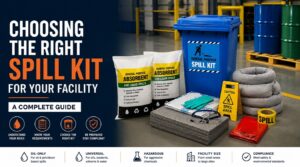
Every industrial workplace, warehouse, laboratory, and manufacturing facility faces the risk of accidental spills. Whether it is a routine leak from machinery, a dropped chemical container, or an unexpected fuel overflow, how your team responds in the first few minutes makes all the difference.
A delayed or improper response can lead to environmental contamination, regulatory fines, workplace injuries, and costly operational downtime. The foundation of an effective spill response strategy starts with having the right spill kit readily available.
This guide breaks down everything you need to know to select, customize, and deploy the ideal spill kits for your facility.
Step 1: Identify Your Potential Liquid Hazards
Before purchasing a spill kit, you must assess the types of liquids stored, used, or generated in your workspace. Spill kits are generally categorized by the fluids they are designed to absorb:
Universal (General Purpose) Spill Kits:
Best for: Water-based fluids, coolants, solvents, antifreeze, and general non-aggressive liquids.
Color code: Usually grey or brown.
Oil-Only (Hydrophobic) Spill Kits:
Best for: Petroleum-based liquids such as hydraulic oil, gasoline, diesel, and motor oil. These kits repel water and actually float, making them ideal for outdoor use or marine environments where oil needs to be cleaned off water surfaces.
Color code: Usually white.
Hazmat (Hazardous Material) Spill Kits:
Best for: Aggressive chemicals, acids, caustics, and unknown liquids. The absorbents in these kits are chemically inert and will not react dangerously when coming into contact with strong chemicals.
Color code: Usually yellow or pink.
Step 2: Determine the Required Capacity
Not all spills are created equal. Buying a standard small kit for a massive fluid transfer area leaves you unprepared, while a massive drum kit is an unnecessary expense for a small chemistry lab.
- Small Spills (Up to 5 gallons): Ideal for labs, maintenance carts, and minor machinery leak points. These are often packed in portable zip bags, bucket containers, or small wall-mounted cabinets.
- Medium Spills (5 to 30 gallons): Perfect for general warehouse floors, manufacturing lines, and delivery bays. 55-gallon drums or wheeled mobile carts are commonly used for this capacity.
- Large Spills (30+ gallons): Designed for bulk storage areas, fuel depots, loading docks, and large-scale manufacturing facilities. These often come in overpack drums that can double as disposal containers for the used absorbent materials.
Step 3: Choose the Right Container Type
The container protects your absorbents from moisture, dirt, and tampering while ensuring the kit is easy to transport during an emergency. Consider where the kit will be housed:
- Drums and Overpack Barrels: Highly durable, weather-resistant, and watertight. Perfect for outdoor areas or heavy-duty industrial zones.
- Cabinet-Style Wall Mounts: Highly visible and accessible in hallways, labs, or high-traffic corridors.
- Wheeled Bins and Carts: Essential for large facilities where a spill might happen anywhere along a long production line; allows workers to wheel the entire inventory directly to the spill site.
- Grab-and-Go Bags/Buckets: Lightweight and portable, ideal for service vehicles, delivery trucks, or isolated utility closets.
Step 4: Check the Contents Inside
A standard, high-quality spill kit should contain more than just loose pads. Look for a comprehensive mix of the following items:
- Absorbent Pads: For wiping surfaces and soaking up pools of liquid.
- Absorbent Socks/Booms: Flexible tubes used to encircle and contain spreading spills, preventing them from entering floor drains or doorways.
- Absorbent Pillows: Ideal for catching high-volume leaks under dripping machinery or placing in sumps.
- Personal Protective Equipment (PPE): Nitrile gloves, safety goggles, and disposal masks to protect responders.
- Disposal Bags & Ties: Heavy-duty polyethylene bags for safely packing out saturated waste material in compliance with local regulations.
- Instruction Sheet: Clear, step-by-step guidance so employees aren’t left guessing during a high-stress moment.
Summary Checklist for Facility Managers
- Audit your liquids: List every chemical, fluid, and oil present in your facility.
- Calculate maximum potential spill size: Base your kit capacity on your largest single container or pipe volume.
- Strategic placement: Keep kits within 30 feet of potential spill hazards (e.g., storage rooms, dispensing stations, and battery charging areas).
- Train your team: Conduct regular training sessions so every employee knows where the kits are and how to use them.
- Establish routine inspections: Appoint a safety officer to check kit inventories monthly to replace used or expired items.
Final Thoughts
By taking a proactive approach to selecting your facility’s spill kits, you safeguard your workers, protect the environment, and maintain regulatory compliance with confidence.
Looking for a trusted safety partner?
Contact NICO Marine today to discuss your requirements and let our experienced team support your operations with industry leading products, technical expertise, and responsive service.